

The love ceremony witnessed by the mountains.
Index / Blog / Andean Weddings
22/06/2023
"A marriage of intertwined tradition and love, where the mountains bear witness and hearts dance to the ancestral rhythm."
Would you like to celebrate your marriage in a different, original, and meaningful way? In Andean countries like Peru, Bolivia, and Ecuador, there is a millennia-old tradition of celebrating marriage with ancestral rituals.

Did you know that this is an age-old tradition dating back to the time of the Incas? Did you know that this ceremony is a way to honor Pachamama and the apus, the divinities of nature? Did you know that this wedding is a symbol of eternal love and harmony with the cosmos? Well, in this article, I will tell you everything about Andean weddings, their rituals, their meaning, and their magic. I will also explain how they are conducted, their essential elements, and the benefits they bring to a relationship.
The first thing to know is that Andean weddings are symbolic ceremonies that do not have legal validity but hold great spiritual value for the couple who chooses to have them. Furthermore, they are not the same in all places but vary depending on the region, community, and worldview of each couple. However, there are some common aspects that can be highlighted. For example, Andean weddings take place outdoors, preferably in a sacred location such as hills, mountains, lakes, or an Inca temple, where the presence of Pachamama (Mother Earth) and the apus (mountain spirits) can be felt. They serve as witnesses and protectors of the couple's union, as the couple vows love and fidelity before them. The couple, along with their families and friends, gather there, along with a priest or shaman who officiates the ceremony.
 Outdoor Andean Wedding
To perform an Andean wedding, it is necessary to have a priest or spiritual guide, who can be a shaman, a "paqo," or an amauta. These individuals possess ancestral knowledge and have the ability to communicate with the forces of nature. The priest is responsible for leading the ceremony and performing the corresponding rituals, such as the offering to the earth, the reading of coca leaves, the exchange of gifts, or the toast with chicha (traditional Andean corn-based beverage).
It is an offering made to Pachamama to thank her for all that she provides and to seek her blessings and protection. A lliclla (a traditional blanket) is used to place various elements, such as coca leaves, flowers, fruits, grains, sweets, coins, wine, and others.
It is a way to discover the destiny and future of a person or situation. The shaman or coca specialist first selects high-quality coca leaves and arranges them in a specific position. Then, they blow on the leaves to activate their energy and perform prayers and ceremonial chants to connect with the spirits and energies of nature.
It is often an act of generosity and reciprocity, where significant objects are given as a token of affection, gratitude, or as part of community celebrations and rituals. Gifts can range from food, crafts, clothing to symbolic items related to the Andean worldview.
Chicha is a fermented beverage made from corn, which holds a sacred value in Andean culture. In the Andean worldview, toasting with chicha is done to express happiness and prosperity.
 The ritual of coca leaf reading
 Ritual of Payment to the Earth - Pachamama
The ceremony consists of a series of rituals that symbolize the commitment of the couple to their community, culture, and surroundings. These rituals represent a strong connection between the couple and Pachamama, or Mother Earth, who bestows her blessings and protection upon them. Additionally, other deities such as the sun, moon, stars, apus or mountain spirits, fire, and water are also invoked.
 The beginning of an Andean wedding
The priest performs a series of rituals that may vary depending on what the couple desires or needs, but generally, an Andean wedding follows the following steps:
Smoke from incense or aromatic plants is used to cleanse negative energies and prepare the couple for their union.
An offering is made with a collection of symbolic items such as coca leaves, flowers, grains, sweets, coins, etc., which are wrapped in a cloth and buried in the earth as a sign of gratitude and respect to Mother Nature. The couple also offers traditional food and beverages such as corn, coca, chicha, or wine to Mother Earth. This symbolizes the gratitude, respect, and protection they seek from nature.
This sacred plant is used to read the past, present, and future of the couple, as well as to provide them with advice and guidance.
 Aura cleansing or purification
It is important to note that this step is COMPLETELY OPTIONAL and is the choice of each couple. They may choose to consume one of these sacred beverages or medicines to have a mystical and profound experience that allows them to connect with their inner selves and the universe.
A seed or a seedling is planted in the ground as a symbol of the love that will grow and bear fruit between the couple.
The four elements are used to represent the essential aspects of life and the relationship. Fire symbolizes passion and energy; air represents communication and understanding; water signifies purification and renewal; and earth symbolizes stability and fertility.
 Ritual with the four elements
 Consumption of sacred plant-based beverage
The bride and groom hold hands, and the priest or shaman ties a colorful ribbon or cord around their wrists. This symbolizes the bond that unites them forever and the harmony between man and woman.
It is a symbolic exchange between the couple, a gesture of love and commitment. They mutually give each other symbolic gifts such as necklaces, bracelets, rings, or blankets. These objects represent the union and complementarity between the man and the woman, the sun and the moon, fire and water. The offerings are placed on a table or altar adorned with blankets and candles.
The exchange of rings takes place at the end of the ceremony as a sign of commitment and fidelity. The rings are typically made of gold or silver, symbolizing the precious and enduring nature of the bond between the couple..
 The handfasting ritual
The bride, groom, and guests dance and sing to the rhythm of Andean instruments such as the quena, charango, or sikus. This symbolizes joy, celebration, and communion among everyone involved.
 Musicians play music for the newlyweds
During the ceremony, the priest delivers words related to love, fidelity, and harmony that should prevail within the couple and with nature. Andean music is also played, featuring instruments such as the pututu, flute, drum, quena, or zampoña. At the end of the ritual, a toast is made with typical regional beverages, and a snack is shared among all attendees.
As you can see, Andean weddings are a very special and unique way to celebrate love. If you ever have the opportunity to attend one, don't hesitate to do so. It will surely be an unforgettable experience for both the attendees and those who want to seal their love in a different and profound way. They are a way to connect with ancestral roots and the wisdom of nature. They are a way to live love as a sacred and marvelous adventure. Until next time!


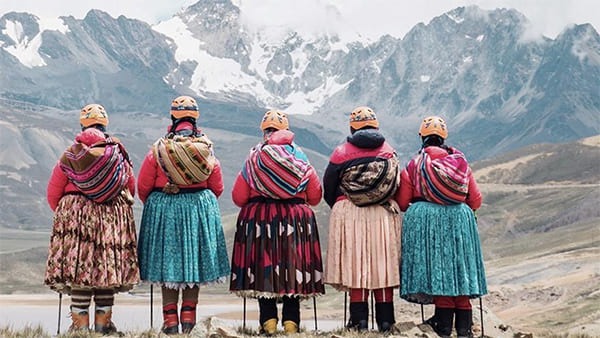
The Climbing Cholitas of Bolivia
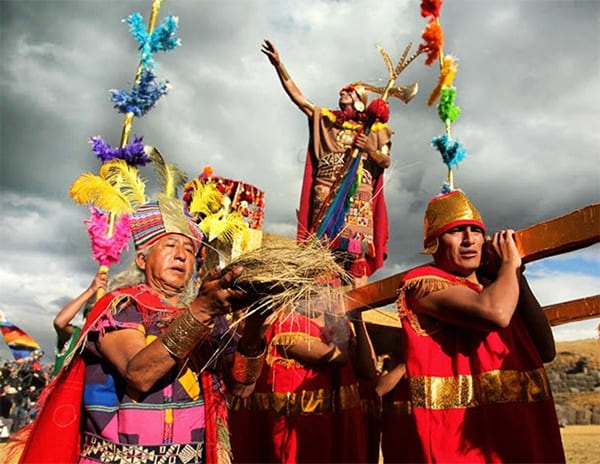
“INTI RAYMI”, the millenary feast of the Sun.
Corpus Christi: A Cusco festivity full of tradition
Lima, Paracas, Nazca, Arequipa, Puno, and Cusco - 14 Days This package is a comprehensive itinerary designed to explore the main tourist attractions of Peru.
An 11-day, 10-night trip is an ideal package for you to discover the country's main tourist attractions.
9 days, an ideal package to explore the main tourist attractions of the country.

This tour package and its itinerary take us to the main tourist spots in the Andean Region. The city of Cuzco, known as "the navel of the world and the empire of the Incas."